


Gut Health: Everything You Need To Know.
Your gut is more than just a place where food gets digested. Inside your intestines lives a whole universe of tiny organisms(bacteria, fungi, and other microbes) collectively called the gut microbiome. Scientists are learning that this microbiome doesn’t just influence digestion, but also your immune system, energy levels, metabolism, and even your mood. (1)
Think of it as an inner ecosystem: when it’s balanced, you feel strong, focused, and energized. When it’s out of balance, you may experience bloating, poor digestion, brain fog, or even low mood.
Why Gut Health Matters So Much
A balanced gut microbiome helps your body:
• Digest food and absorb nutrients like vitamins and minerals.
• Produce short-chain fatty acids (SCFAs) that reduce inflammation and keep your gut lining healthy.
• Strengthen immunity- around 70% of your immune system is in the gut.
• Communicate with your brain (the “gut-brain axis”), influencing mood, stress response, and even sleep.
• Support metabolism and weight control by regulating blood sugar and energy balance.
📌 Research shows that people with more diverse gut bacteria generally have better health outcomes, including lower inflammation and stronger immunity (Nature Reviews Microbiology, 2018).
Signs Your Gut Needs Some TLC
Your body often sends signals when your gut is struggling. Some common signs include:
• Frequent bloating, gas, or indigestion.
• Irregular stools (constipation or diarrhea).
• Food sensitivities that suddenly appear.
• Constant fatigue or poor sleep.
• Mood swings, brain fog, or low energy.
If you notice severe symptoms like unexplained weight loss, bleeding, or persistent pain, it’s important to consult a doctor.
The Biggest Factors That Shape Your Gut
Diet – What you eat is the number one driver of gut health. Diets high in fibre and plant-based foods boost healthy bacteria, while processed, high-sugar diets feed less beneficial microbes. (Nutrients, 2021)
Antibiotics & medications – Life-saving when needed, but they can wipe out beneficial bacteria and reduce microbial diversity for months.
Lifestyle – Poor sleep, high stress, alcohol, and lack of exercise all disrupt the microbiome. In contrast, regular movement, good sleep, and stress management support it.
Fermented foods & probiotics – Yogurt, kefir, sauerkraut, kimchi, and probiotic supplements can help restore balance and improve digestive health.
How to Improve Gut Health — Practical Tips
Here are some simple, sustainable ways to take care of your gut:
1. Eat a Plant-Rich, Diverse Diet
Aim for different plant foods each week (fruits, veggies, beans, lentils, nuts, seeds, herbs, and spices). Diversity matters more than perfection.
Add colour to your meals- different colours = different nutrients for different microbes.
2. Boost Your Fibre Intake
Fibre is food for your “good” bacteria.
Aim for 25–35g/day from whole foods like oats, apples, chia seeds, broccoli, lentils, and whole grains. MyFitnessPal helps track your daily fibre intake.
Increase gradually to avoid bloating.
3. Add Fermented Foods
Include a serving daily if you can: yogurt, kefir, sauerkraut, kimchi, miso, or kombucha.
Fermented foods not only provide beneficial bacteria but also compounds that reduce inflammation (Cell, 2021).
4. Limit Processed Foods & Excess Sugar
Processed, high-sugar foods feed harmful bacteria and reduce diversity.
Swap sugary snacks for fruit, nuts, or dark chocolate.
5. Don’t Forget Lifestyle
Sleep: 7–9 hours per night keeps your gut-brain axis healthy.
Stress: Chronic stress can weaken the gut lining. Try meditation, yoga, or even 10 minutes of deep breathing.
Exercise: Regular activity encourages a more diverse microbiome. Even walking daily makes a difference.

Supplements That Can Support Gut Health
Food should always come first, but some supplements have been studied and can help:
Probiotics: “Good” bacteria in capsule form. Helpful for people with IBS or after antibiotics. Choose products that list the exact strain (e.g., Lactobacillus rhamnosus GG) rather than generic “probiotic blend.”
Prebiotics: Fibres like inulin or FOS that feed good bacteria. If you’re sensitive to gas, start small.
L-Glutamine: An amino acid that supports gut lining repair and may help with “leaky gut.”
Zinc carnosine: Shown in studies to protect the gut lining and reduce irritation.
⚠️ Always choose high-quality, third-party tested supplements and check with a professional if you’re on medication or have health conditions.
Final Thoughts
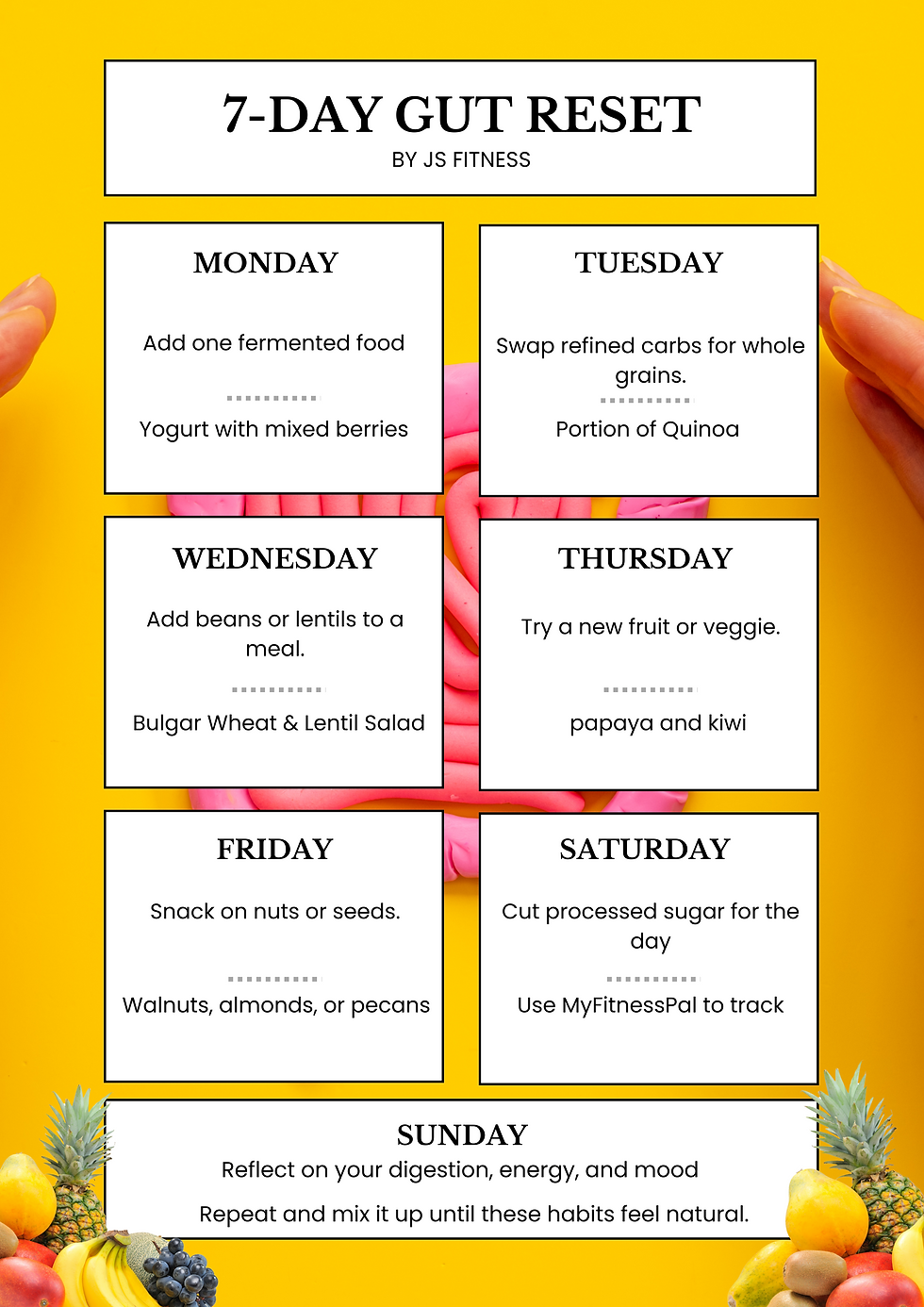
A healthy gut is the foundation for overall wellness, from stronger immunity to better mood and energy. Start small: add one extra plant food to your meals, include a little fermented food, and pay attention to your lifestyle habits.
Your gut doesn’t need perfection, it needs consistency, balance, and care. 🌱


Comments